One Mars Site, Three Water Episodes
Mars did not simply have water, then lose it. Rocks at one Jezero Crater site preserve a more complicated sequence of changing environments.
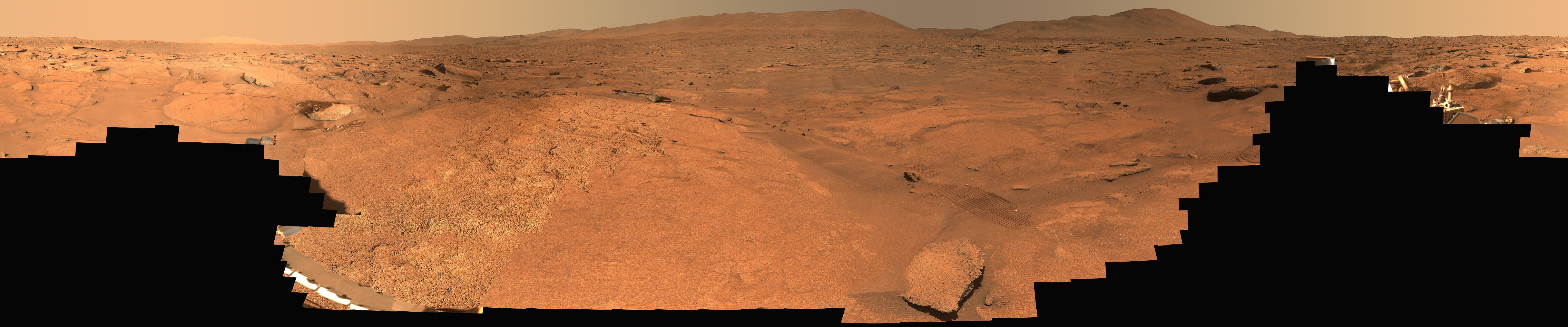
Original editorial video with synthetic narration and burned-in captions. Image: NASA/JPL-Caltech/MSSS. Download captions (SRT) · Download video.
The important distinction
NASA's September 21 report describes at least three water interactions recorded in rocks of Jezero's Margin Unit—not an exhaustive three-stage history of all Mars. The order can be inferred; the ages remain undetermined. Water-related minerals are evidence about environments, not proof of life.
Full video transcript
Mars kept a water diary in stone. And the story is stranger than one vanished lake.
A September twenty twenty-six study examined rocks along the inner rim of Jezero Crater. Scientists expected layered sediments. Instead, they found rock born from magma, changed by water at least three times.
First, groundwater rich in carbon dioxide reacted with the rock. A second episode may have involved the ancient lake.
Later, heated water moving underground left another mineral record. The team can work out the sequence, but not the ages of those events.
That matters because a world can become more or less welcoming to life as its water changes. These rocks record changing environments. They do not, by themselves, prove that life existed.
What would convince you: chemistry, microscopic structures, or both? Compare your answer with the evidence in the source report; the question is an invitation to think, not a claim of a discovery of life.
Sources, image credit and disclosure
- NASA: Discovery Reveals Complex Water Systems on Early Mars, September 21, 2026. This explainer is based on that public report; the underlying journal article was not independently reviewed for this piece.
- NASA source panorama of the Jezero Crater landscape. Credit: NASA/JPL-Caltech/MSSS. Cropped and panned for this editorial video; text overlays added.
- NASA image and media usage guidelines.
Original AI-assisted editorial and synthetic narration. Not a NASA production or endorsement. NASA is not responsible for this script. This SiloLaunch field note is hosted in the existing Cognilode publication; it is not a YouTube upload or an advertisement for a software service.