
The Economics of Agentic Systems
From Token Counts to Cost per Work Product
This research informs the hands-on architecture and implementation work Cognilode delivers for engineering teams.
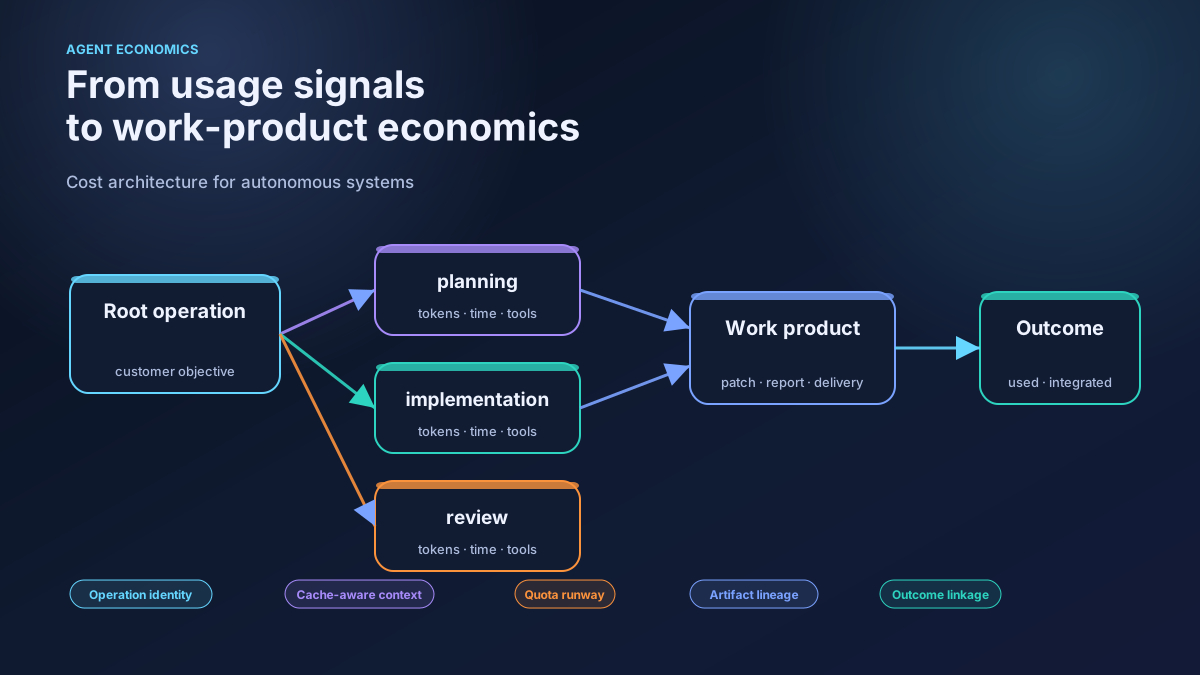
The first cost dashboard for an AI application is usually simple: requests, tokens, and estimated dollars by model.
That is a useful beginning. It is not an economic model for an autonomous system.
A long-running agent may plan, search, retrieve memory, call tools, delegate work, generate code, run tests, operate a browser, create a report, and request review. One user request may cross several processes and models before it produces anything a person can use. Some input may be served from cache. Some work may run on local infrastructure rather than a metered API. A request may consume substantial resources even when it produces no final answer. A successful model call may create an artifact that is never opened, while a more expensive planning call may prevent hours of rework.
A provider invoice can describe account spend. It cannot explain the economics of the work.
At Cognilode, we have implemented and iterated on resource accounting across long-running autonomous workers, interactive coding sessions, memory summarization, technical-document generation, controlled experiments, browser and visual-model operations, business intake, repository analysis, and media workflows. The systems changed over time, but one conclusion remained stable:
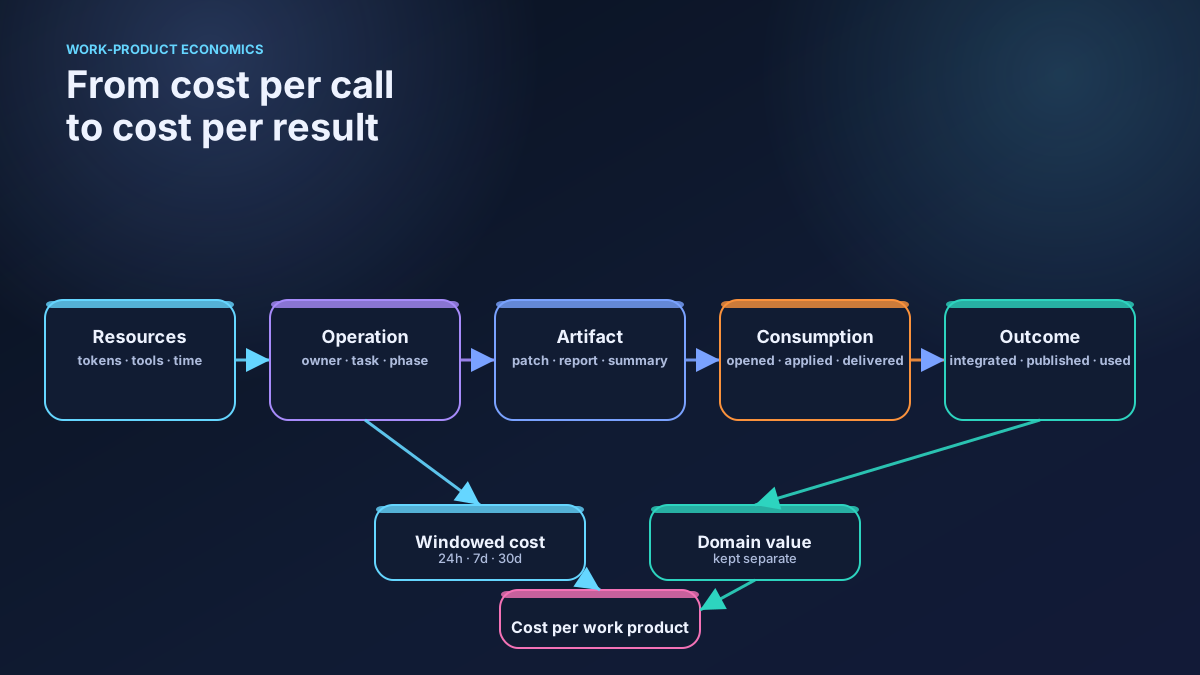
The economics of an autonomous system begins when every expensive action can be traced from resource observation, through the operation that caused it, to the work product it created and the outcome that followed.
The important shift is from cost per call to cost per operation, work product, and delivered result.
Why Tokens Are Not Economics
Tokens are measurements. Economics begins when those measurements acquire meaning.
Suppose a coding agent uses one million tokens during a task. That number alone does not tell us:
- whether the tokens belonged to planning, implementation, review, or memory construction;
- how much input was cached;
- whether a strong model prevented retries;
- whether a local model supplied part of the work;
- which repository area or customer request owned the task;
- what patch, report, or delivery resulted;
- whether the result was later used.
The same token count can describe very different economic events.
A million tokens spent generating disposable alternatives is not the same as a million tokens spent producing a reusable technical report. A planning call that chooses the correct architecture may be more valuable than several cheaper implementation attempts. A cached context prefix may have a very different effective price from a frequently rewritten prompt of the same size.
The economics layer therefore needs several dimensions:
| Dimension | What it explains |
|---|---|
| Resource measure | What was consumed: input, cached input, output, reasoning, latency, GPU time, browser planning, or another meter |
| Pricing interpretation | How that resource maps to money under a particular provider, model, tier, date, or local-equivalence rule |
| Operation identity | Which request, task, phase, turn, experiment, or tool call caused the resource use |
| Work-product identity | What patch, report, summary, message, or action resulted |
| Outcome identity | Whether the work was used, integrated, delivered, or associated with a later result |
This produces a five-layer architecture.
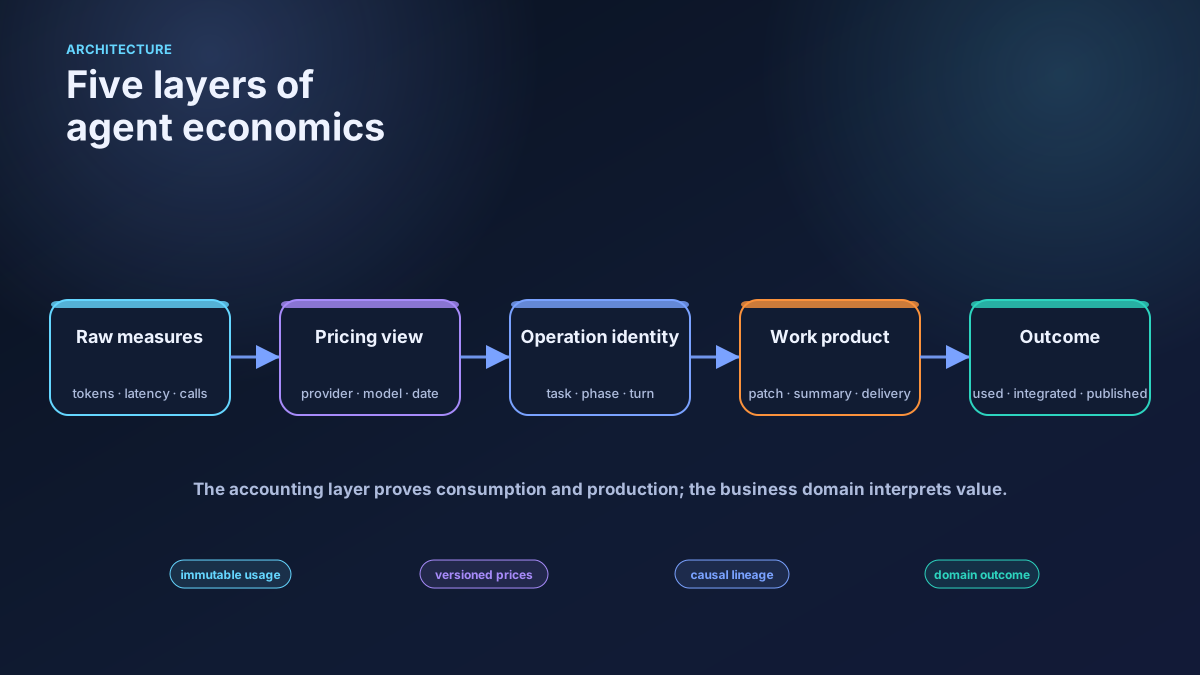
A key architectural boundary sits between the fourth and fifth layers. The accounting system can establish what was consumed and what was produced. The product or business domain decides what the result was worth.
That separation keeps the accounting trustworthy. It prevents token counts, file changes, or completed calls from being presented as business value merely because they are easy to measure.
Every Cost Needs an Owner
Autonomous work is asynchronous. A single request can branch into a tree of operations:
- a planning phase;
- an implementation phase;
- retrieval and memory operations;
- several model calls;
- tool and browser actions;
- a generated artifact;
- a review step;
- a later delivery.
If usage events record only provider and model, the causal structure disappears. A dashboard may know that a model consumed resources, but not why the call existed.
The solution is a stable root operation identity with child identities for each meaningful phase and action.
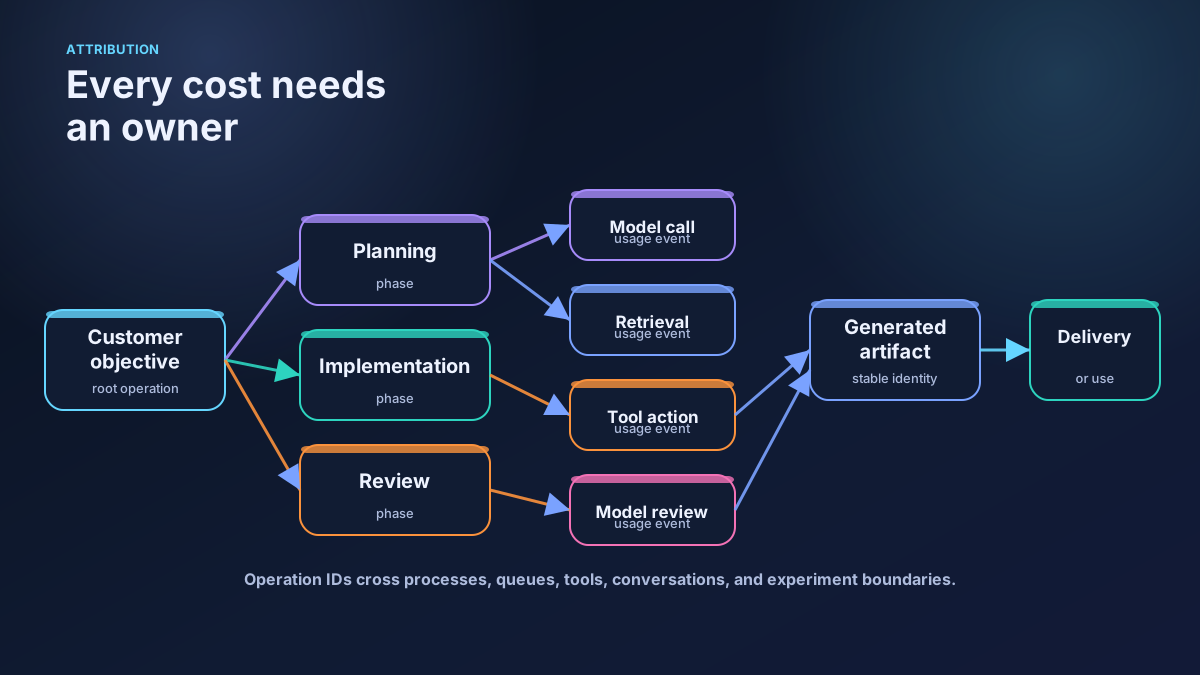
The operation identity should survive the boundaries that autonomous systems commonly cross:
- subprocess environment variables;
- queue envelopes;
- runtime manifests;
- model-call metadata;
- tool invocation headers;
- experiment manifests;
- conversation threads and turns.
This allows several useful views of the same resource stock.
A runtime engineer can inspect usage by process and phase. A product owner can inspect cost by workflow. A consulting team can inspect cost by customer objective. A platform owner can inspect provider and model distribution. The underlying events remain the same; only the projection changes.
We used this pattern to separate planning and implementation usage in long-running autonomous work, inspect interactive coding costs turn by turn, attribute memory-generation costs to the summaries produced, and attach analysis cost to technical reports rather than to the software being analyzed.
Confidence should travel with attribution
Not every historical event has the same attribution quality.
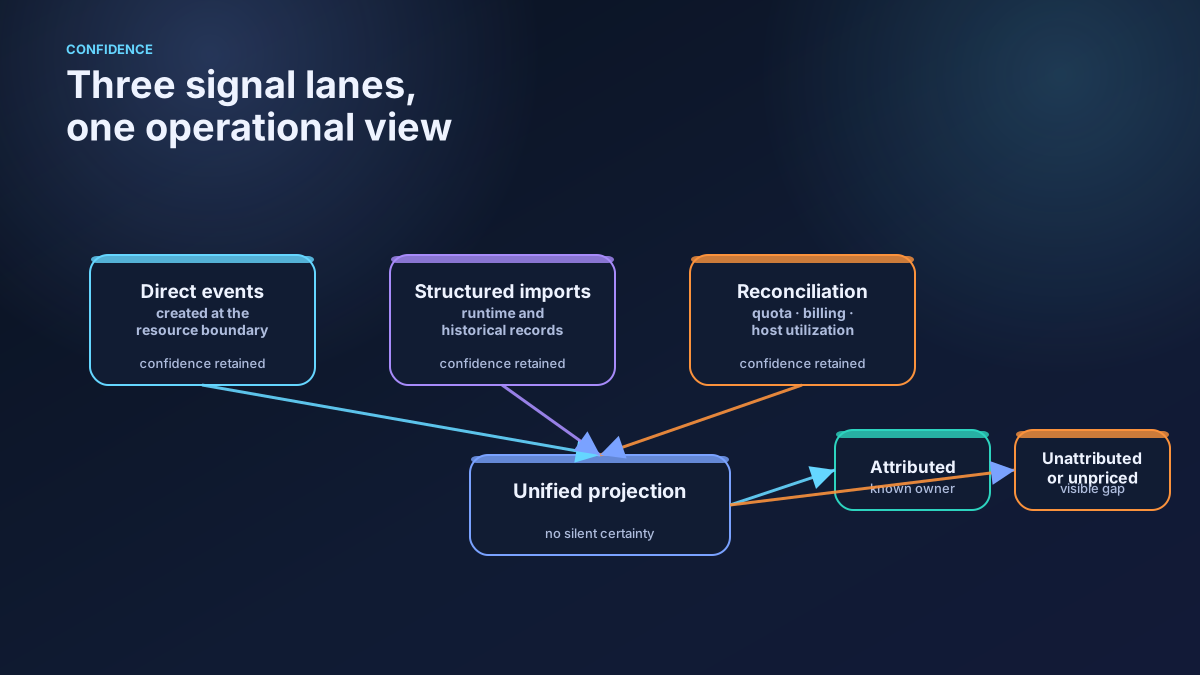
A model response that carries its operation identity at creation time has strong attribution. A structured runtime event imported later may also be strong if it preserves the same identity. An older usage record joined by timestamp and process path may be useful but less precise. A provider-wide quota movement can help reconcile totals, but should not be assigned to a particular task without additional information.
A robust architecture preserves those distinctions instead of silently turning all joins into certainty.
Three lanes are useful:
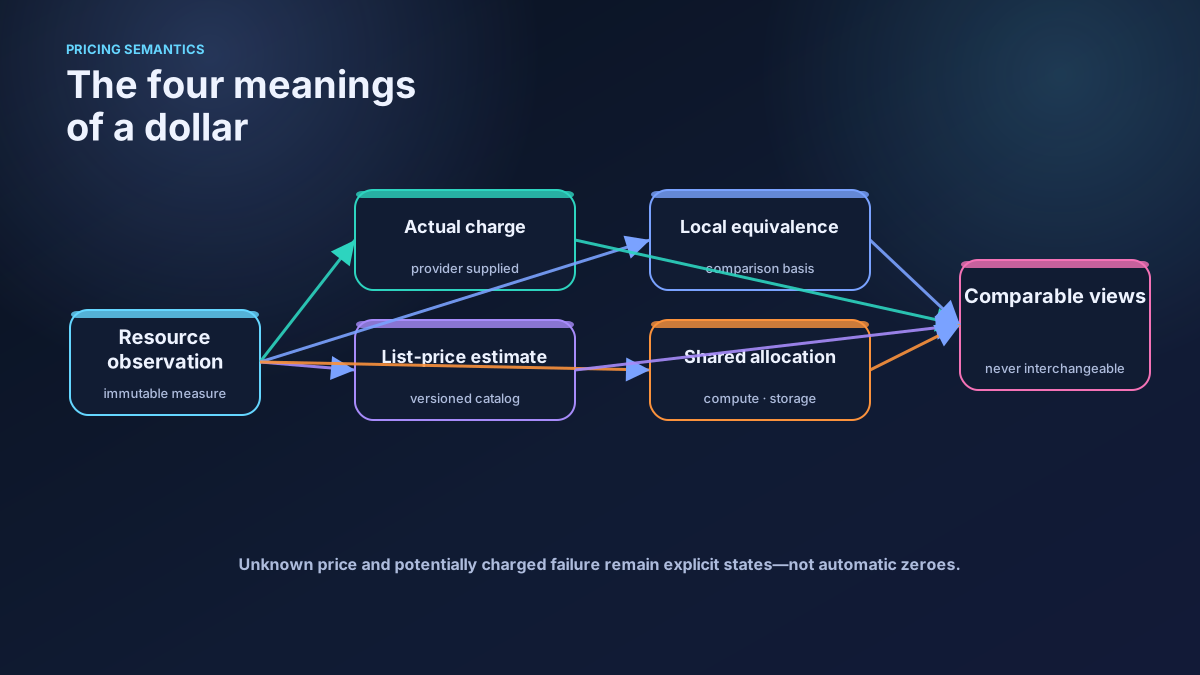
The Four Meanings of a Dollar
A single field named cost_usd is rarely sufficient.
Autonomous systems may need to represent at least four different monetary interpretations.
1. Actual provider charge
An amount supplied by the provider or billing system for a completed or accepted request.
2. API list-price estimate
A calculation based on a versioned pricing table and observed meter quantities. This is useful when authoritative billing arrives later or is not available at request granularity.
3. Local-equivalence estimate
What a locally executed model call would have cost under a comparable hosted price schedule. This is useful for comparing routing strategies, but it is not a provider invoice.
4. Allocated shared-infrastructure cost
A share of GPU time, CPU time, storage, or another pooled resource assigned to an operation through an explicit allocation method.
A versioned pricing catalog should therefore carry more than a model name and price. Useful dimensions include:
- provider;
- model family and variant;
- service tier;
- meter component;
- unit and scale;
- effective date;
- price source;
- confidence;
- monetary interpretation.
Raw usage should remain immutable. If a price changes or a model identifier is normalized differently later, the system can generate a new projection without rewriting the original resource event.
This matters because economics is often retrospective. A team may want to compare several months of work under a consistent price basis, or inspect what the estimated cost looked like under the rates active at the time.
It is equally important to preserve unknown states. An accepted request may be potentially chargeable even if no final response was produced. A local call may have no remote bill but still consume scarce GPU capacity. A model identifier may not yet map to a known price family. The correct representation is not automatically zero.
Zero provider bill is not zero economics.
Cache Architecture Is Cost Architecture
Input tokens are often the largest resource class in long-running autonomous systems, but input is not economically uniform.
A useful token model keeps at least four classes separate:
[ T_{total} = T_{uncached\ input} + T_{cached\ input} + T_{output} + T_{reasoning} ]
A pricing projection can then apply component-specific rates:
[ C = p_u T_{uncached} + p_c T_{cached} + p_o T_{output} + p_r T_{reasoning} ]
The exact rates vary by provider, model, tier, and date. The architectural conclusion does not:
How context is assembled changes the economics of the system.
A stable instruction and memory prefix may benefit from cache reuse. Rewriting the entire prefix for every turn may convert otherwise cacheable content into uncached input. Compacting too frequently can create additional summarization calls and reinjection costs. Compacting too late can allow the active context to grow faster than its useful information content.
The objective is not simply “make prompts shorter.” It is a three-way balance:
- provide enough context to perform the task well;
- preserve stable structure where cache reuse is available;
- compress selectively when uncached growth stops producing proportional value.
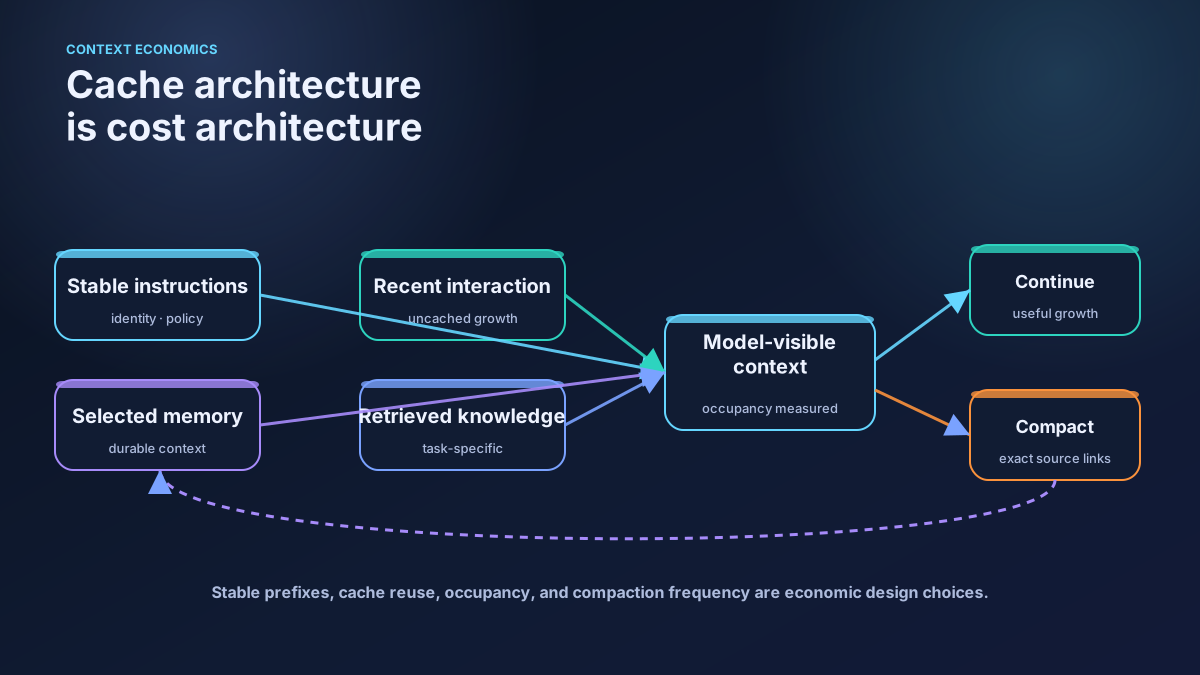
We used explicit context budgets for pinned material, recent interaction, retrieved memory, summaries, and plan-aware content. Retrieval could diversify selections under a token ceiling. Runtime occupancy could inform compaction. Summary-generation usage could be linked to the summary artifact itself.
These are not merely prompt-engineering details. They are economic controls embedded in context architecture.
Model Routing by Expected Total Cost
The cheapest call is not always the cheapest task.
A small model may have a lower price per token but require retries, additional tool calls, or more human repair. A stronger model may be economically preferable for a high-impact planning decision because it reduces downstream uncertainty. A deterministic local operation may be superior to any model for a well-specified transformation. A local model may eliminate remote-provider spend while consuming internal compute.
A practical routing ladder is:
Deterministic local operation
        ↓
Local or low-cost model
        ↓
Standard remote model
        ↓
Strong reasoning model
        ↓
Multi-pass, debate, or consensus
The router should consider more than list price:
- task complexity;
- uncertainty;
- modality;
- privacy and locality;
- latency requirements;
- expected context size;
- cache availability;
- remaining provider runway;
- reversibility of an incorrect result;
- likely repair or retry cost;
- downstream value of the decision.
A useful expected-task-cost model is:
[ E[C_{task}] = C_{call} + P(retry)C_{retry} + E[C_{repair}] + E[C_{delay}] ]
For a higher-level decision, the routing policy can consider expected value:
[ E[V] = P(success)V_{outcome} - E[C_{task}] - E[R_{risk}] ]
The accounting system supplies the resource and price terms. Evaluation supplies retry, repair, and success information. The business domain supplies outcome value.
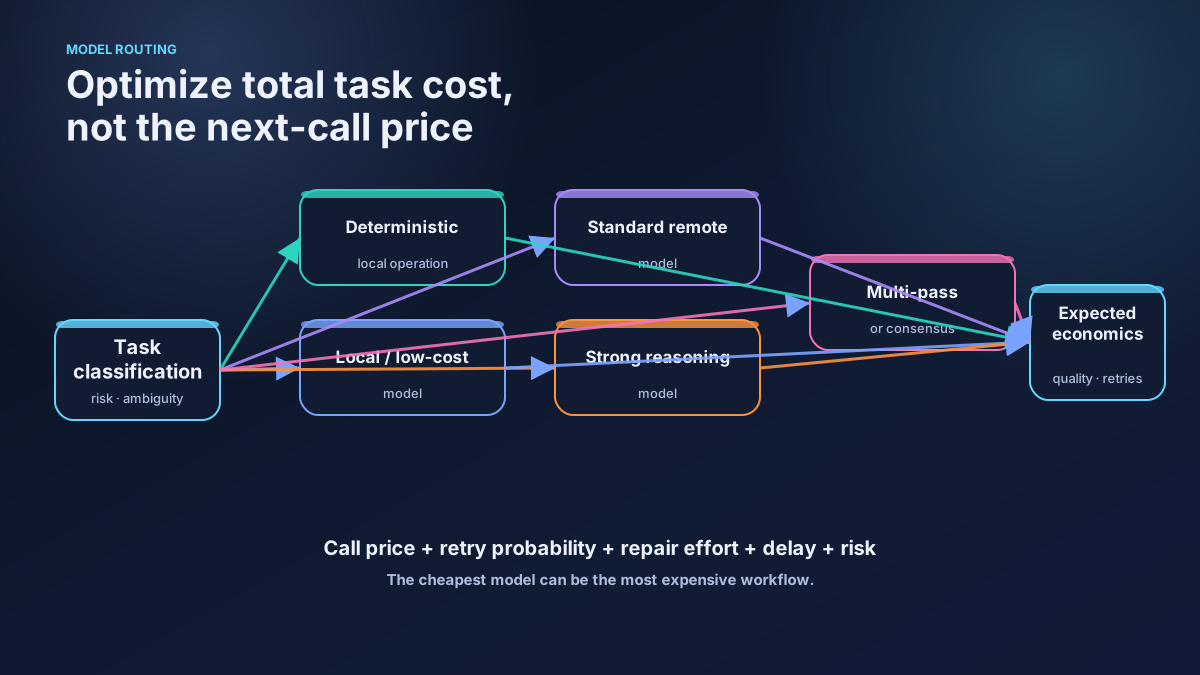
This creates a practical FinOps loop for agentic systems. Historical usage reveals which task classes repeatedly escalate, retry, or require repair. Routing policy can then reserve stronger models for the decisions where they create leverage and use cheaper or local paths for routine work.
Quota Is Operational Runway
Provider quota and monetary cost are related, but they are not the same signal.
Quota answers a capacity question:
How much provider-supplied work can the system still perform before the next reset or limit?
A useful quota service should track:
- current usage percentage;
- remaining percentage;
- reset timestamp;
- observation timestamp and freshness;
- reset-aligned periods remaining;
- current-period allowance;
- current-period usage;
- launch-safe or launch-hold guidance.
If the provider resets weekly, remaining capacity can be distributed over the remaining reset-aligned periods:
[ B_{period} = \frac{Q_{remaining}}{N_{periods\ until\ reset}} ]
The current pace ratio becomes:
[ P_{pace} = \frac{Q_{used\ this\ period}}{B_{period}} ]
This turns an abstract weekly percentage into an operational answer: whether the system has sufficient runway for another long-running autonomous task.
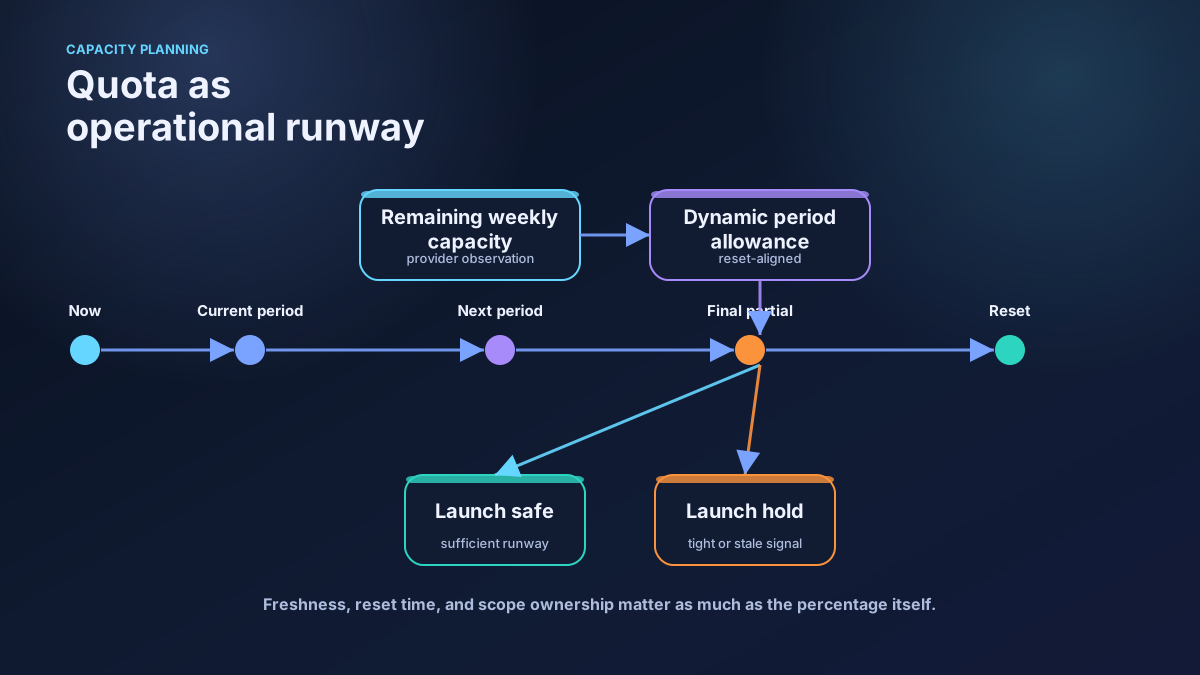
Freshness belongs in the decision. A quota observation should include its age and source. An old capacity reading should not be treated as current runway.
Scoped budgets are also important. We used per-experiment quota anchors so one experimental variant could receive a bounded resource allotment without imposing the same limit on unrelated work. This suggests a general principle:
Budgets should stop the scope that owns them.
A trial budget should constrain the trial. A customer workflow budget should constrain that workflow. A memory-maintenance budget should pace memory work. Global shutdown should not be the default response to every local overage.
From Cost per Call to Cost per Work Product
The accounting becomes commercially useful when it links resource use to durable outputs.
Examples of work products include:
- a code patch or commit;
- a technical report;
- a durable summary;
- a customer response;
- a published asset;
- a browser-action receipt;
- an experiment result;
- a database migration;
- a structured decision.
The work product should have its own stable identity. The operation that created it records that identity. Later systems can record that they opened, applied, cited, integrated, published, delivered, or superseded the artifact.
We used this model across several kinds of autonomous work:
Long-running agent work
Planning and implementation phases carried separate usage totals while retaining a whole-run aggregate. This made it possible to see whether resources were being spent on deciding what to do or on carrying out the decision.
Interactive coding sessions
Conversation and turn identities connected usage to a specific exchange rather than only to an event-log file or account-level total. Teams could review the economic shape of one turn without losing thread-level context.
Memory construction
Summary-generation calls carried operation identities, and the resulting summaries retained links to their usage events. The cost of creating durable memory could therefore be examined at the artifact level.
Technical documentation
Repository analysis and report-generation costs could be separated from implementation costs. This is useful because understanding a system and changing it are different work classes.
Controlled experiments
Each variant could receive its own quota anchor and operation lineage. Comparison could include resource use without allowing one experiment to dominate unrelated capacity.
Browser and visual operations
Model resources used to plan a computer action were retained as part of the action report. Multimodal operations participated in the same operation-level accounting model as text calls.
Business intake and delivery
Usage inherited the identity of the business workflow that initiated it. This created a path from an inbound request, through autonomous work, to a later response or delivery.
Content operations
Public engagement metrics and resource use could be viewed together over time without being collapsed into a synthetic ROI number. Cost remained a mechanical fact; business interpretation remained domain-owned.
Dashboards Should Begin With Work, Not Model SKUs
A model-centric dashboard is useful for procurement. An operation-centric dashboard is more useful for running an autonomous system.
A practical hierarchy is:
source or customer objective
→ operation owner
→ operation kind
→ task, worker, or conversation
→ provider and model
→ individual resource event
Different time windows answer different questions.
Last 24 hours
- What is consuming resources now?
- Which long-running task or experiment dominates current usage?
- Is provider runway sufficient for another launch?
- Is usage appearing under the expected operation owner?
Last seven days
- Which operation classes dominate the week?
- How much work used local versus remote models?
- Which workflows generate the most output and reasoning tokens?
- How much usage remains unpriced or unattributed?
Last 30 days
- Is cache reuse changing?
- Are memory, review, retrieval, or tool costs growing?
- Which model-routing policies deserve review?
- Which artifacts are being consumed after generation?
All recorded history
- What are the long-run cost centers?
- Which operation classes are emerging or disappearing?
- How have model families and pricing interpretations changed?
- Which historical resource use can still be tied to durable work products?
A premium operator view should surface attributed, unattributed, unpriced, and reconciliation-only usage separately. Uncertainty is operationally useful. It points to missing instrumentation or incomplete lineage rather than disguising the gap inside a total.
Design Principles for Agentic Economics
1. Capture usage at the resource boundary
The strongest event is created where the resource is consumed: model response, runtime usage event, browser planner, visual call, or metered tool.
2. Preserve raw measures independently of prices
Token quantities, latency, retries, and compute duration should remain usable when pricing tables change.
3. Give every operation a durable identity
Propagate root and child identities through processes, queues, tools, trials, and conversation turns.
4. Keep monetary interpretations distinct
Actual billing, list-price estimates, local equivalence, and allocated infrastructure cost answer different questions.
5. Record cached and uncached input separately
Cache behavior is part of context economics and should be visible in routing and compaction decisions.
6. Route by expected total task cost
Include retries, repair, delay, and risk—not only price per token.
7. Treat quota as a capacity signal
Use reset-aware pacing and freshness-aware launch guidance rather than presenting quota as dollars.
8. Scope budgets to the work that owns them
Experiments, memory processing, customer workflows, and long-running tasks should have boundaries appropriate to their blast radius.
9. Link resource use to durable outputs
A work product should be able to identify the operation and resource events that created it.
10. Let the business domain interpret value
Accounting can establish spend, attribution, production, and consumption. Value belongs to the domain where the outcome occurred.
The Economic Layer Becomes Part of the Agent Architecture
As autonomous systems become more capable, their resource use becomes less like an API call and more like an operating system workload.
They maintain context, retrieve knowledge, run tools, create artifacts, wait, retry, deliberate, delegate, and act across multiple surfaces. Their costs emerge from architecture choices:
- how context is assembled;
- which parts remain cacheable;
- when memory is summarized;
- which model handles which decision;
- how many variants run in parallel;
- where local compute replaces remote billing;
- how retries and repair are handled;
- which work products are retained and reused.
A token dashboard cannot answer those questions by itself.
A serious economic architecture combines:
- immutable resource observations;
- versioned pricing;
- stable operation lineage;
- cache-aware context metrics;
- expected-cost model routing;
- reset-aware quota runway;
- artifact and delivery links;
- windowed reporting by owner and operation;
- domain-owned outcome interpretation.
That is how teams move from “How much did the model cost?” to more useful questions:
- What did this autonomous task cost?
- Which phase consumed the resources?
- Which context policy improved cache reuse?
- Which model route minimized total repair?
- What did the run produce?
- Was the product used or delivered?
- Is there enough runway for the next operation?
Those are the economics of agentic systems.
About Cognilode
Cognilode designs and implements advanced AI infrastructure for teams building autonomous and agentic systems. Our work spans retrieval architecture, long-running memory, governed experimentation, runtime operations, computer use, software-change pipelines, model routing, resource accounting, and production integration.
When an AI initiative has moved beyond isolated model calls, its economics should move beyond token totals. We help teams build the identity, attribution, routing, and operational layers needed to understand what autonomous work costs—and what that work produces.
Know what each autonomous work product costs—and why.
Cognilode can trace model, tool, cache, and infrastructure usage through operations to delivered artifacts, then improve routing and quota policy around real unit economics.
Related engineering notes

The Control Plane Outside the Agent
A practical architecture for operating autonomous AI systems with independent process custody, semantic health, runtime isolation, calibrated controls, and coherent rollback.
Read article →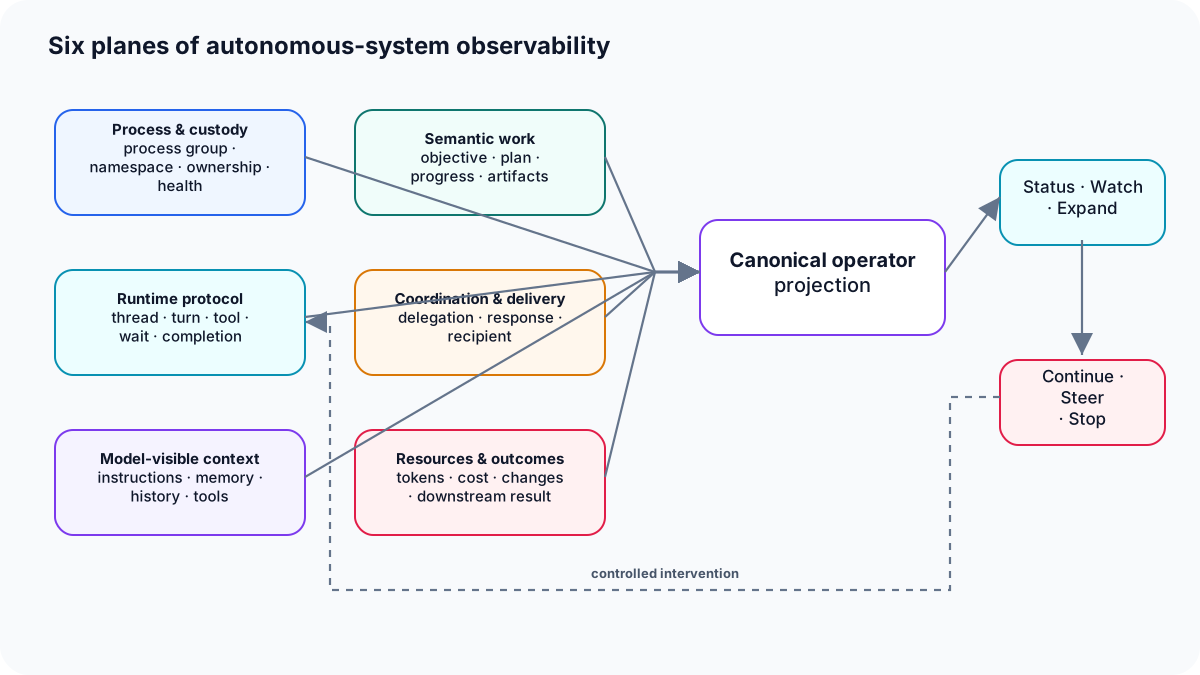
Why Agent Traces Are Not Enough
A practical architecture for observing what autonomous systems saw, decided, delegated, spent, changed, and delivered—not merely which API calls completed.
Read article →